
Customer experience testing is how businesses ensure every interaction a customer has with their product, service, or brand goes smoothly and meets expectations.
It’s about identifying what’s working, and what isn’t, and finding ways to improve. Whether you’re troubleshooting website glitches or fine-tuning in-store services, understanding this process is key to keeping your customers happy.
This article breaks down the core concepts of customer experience testing and what it involves.
TL;DR – Key Takeaways
- Customer experience testing validates assumptions with real users, shifting decisions from internal opinion to evidence-based insights that improve satisfaction and loyalty.
- Use a diverse mix of methods (usability tests, A/B comparisons, surveys, analytics) to understand both what users do and why they behave that way.
- Recruit the right audience and keep it ready — representative participants (ideally via your own customer community) make feedback relevant, reliable, and repeatable.
- Centralize feedback and break silos so insights from different tests and teams converge into coherent patterns that inform action.
- Make testing continuous and agile — fast feedback loops and iterative cycles accelerate learning and keep your experience aligned to evolving expectations.
- Tie insights to business outcomes by anchoring tests to clear goals (e.g., retention, satisfaction, conversion), so results drive strategic decisions, not just reports.
What Is Customer Experience Testing?
Customer experience testing systematically evaluates how customers interact with your products, services, and touchpoints to uncover insights for improving usability, functionality, and satisfaction. Relying on real customer feedback and data, it identifies pain points and refines offerings. Unlike internal testing, it provides a customer-centric perspective rooted in actual user behavior, rather than assumptions.
Aligning with customer expectations is essential for building trust and loyalty. Customer experience testing helps businesses adapt by ensuring seamless, positive interactions, which drive higher retention, reduced churn, and a competitive edge. By prioritising customer experience, businesses don’t just meet expectations—they define them.
How Different Teams Benefit From Customer Experience Testing
- Product and UX teams can do testing already during development and also quickly identify design flaws and iterate on solutions to improve user interfaces.
- CX teams gain insights to improve onboarding, streamline service interactions, and optimize customer exploration.
- Marketing teams can validate messaging, refine campaigns, and even benchmark performance against competitors.
- Business leaders use these insights to make strategic decisions, optimise operations, and identify growth opportunities.
Each contribution feeds into a larger goal: getting actionable insights that directly influence success across your organisation. Customer experience testing isn’t just a tool; it’s a foundation for smarter, customer-driven decisions.
Customer experience testing bridges the gap between assumptions and actionable improvements.
Types of Customer Experience Testing
Effectively evaluating and improving customer experience requires diverse testing methods. These approaches provide insights into how users interact with your product or service, helping you identify issues and opportunities for optimisation.
Usability Testing
Usability Testing is one of the most common methods. It focuses on understanding how real users maneuver through and interact with your product. Logging and analysing participant behavior when completing specific tasks can help you spot obstacles like confusing navigation or inefficient workflows. The goal is to ensure your product is intuitive and functional, minimising user frustration.
A/B Testing
Another widely used approach is A/B Testing, which lets you compare two or more versions of a webpage, feature, or product design. This method helps determine which version performs better based on measurable criteria. The insights gained from A/B Testing enable you to make evidence-based decisions to improve user engagement and overall experience.
Surveys and Feedback
Surveys and Feedback provide direct input from your users. By using tools like structured surveys, quick polls, or open-ended feedback forms, you can gather both quantitative data and qualitative insights. This method helps highlight customer preferences, pain points, and overall satisfaction, giving you clear direction on where to focus your improvements.
Heatmaps and Behavioral Analytics
For a deeper look into user behavior, you can turn to Heatmaps and Behavioral Analytics. Heatmaps visually represent where users go on a webpage to complete specific tasks. Combining this data with user feedback gives you a well-rounded understanding of how users interact with your product, allowing you to address inefficiencies and optimise the interface.
Testing methods like usability testing and A/B testing ensure your product evolves based on data, not assumptions.
Best Practices in Customer Experience Testing
Identifying and Engaging the Right Audience
To conduct effective customer experience testing, you must first identify and engage the right audience. Insights may be irrelevant without input from participants who reflect your actual users, leading to misguided decisions and wasted resources. Testing with the wrong audience risks missing opportunities for meaningful improvement.
Success starts with targeting accurate user personas, representing ideal customers based on factors like demographics, behaviors, and goals. Testing participants aligned with these personas ensures relevant and actionable feedback. For example, testing a product for working professionals in their 30s with college students skews results and fails to address your core audience’s needs.

Finding representative participants is challenging, as the ideal audience often spans diverse age groups, geographic regions, and usage habits. This diversity reveals how different segments interact with your product or service, and ignoring it risks missed insights from underrepresented but key groups. Balancing internal and external testers is also essential—internal users identify technical flaws, while external users provide real-world performance insights, ensuring comprehensive evaluations.
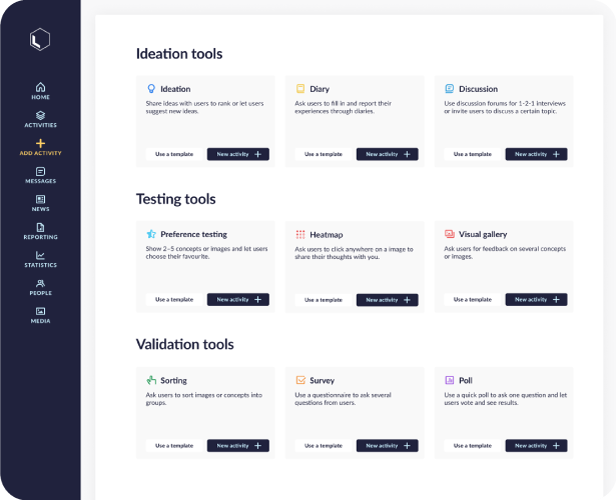
Recruiting the right audience for each time you need to do customer experience testing is both time consuming and expensive, thus it restricts how frequently you are able to do testing. The best solution to overcome this obstacle is to set up your own customer community, a pool of engaged customers that are willing to help you in developing your products and services. That customer community is always there, available for a test anytime, making testing fast and cost efficient. Online platforms like Leanlab allow you to do just that, significantly lowering the threshold for customer experience testing.
Managing Fragmented Feedback
Fragmented feedback limits the effectiveness of customer experience testing by scattering insights across teams, tools, or stages. For example, one team may collect surveys, another may interview users, and yet another may conduct usability tests—without a centralised system to unify the data. This disorganisation prevents a clear understanding of customer feedback.
Identifying patterns or actionable themes becomes problematic when feedback is inconsistent or siloed. One dataset may highlight a recurring complaint, while another contradicts it entirely. Without a unified view, these discrepancies create confusion, delay improvements, and weaken your ability to deliver a seamless customer experience.

A centralised mixed methods platform like what Leanlab provides is essential for overcoming fragmented feedback, enabling teams to aggregate, organise, and analyse all insights in one place. This unification ensures everyone works with the same information, streamlining collaboration and facilitating meaningful conclusions. Features like real-time data dashboards and easy shareability of results make this process efficient and effective.
To further address feedback fragmentation, align feedback collection with clear goals and timelines. Define in advance what you aim to learn from your testing efforts, and set schedules for collecting, reviewing, and acting on insights. This structured approach prevents teams from working in silos or gathering irrelevant data, ensuring consistent and actionable feedback.
Accelerating Iteration Cycles
Fast-paced development cycles require quick integration of user feedback to meet evolving customer expectations. Delays in acting on insights can lead to missed opportunities as competitors address similar issues faster. Traditional testing methods, like surveys and interviews, often create bottlenecks, slowing down improvements in customer experience.
Adopting agile testing and iteration approaches is crucial to overcoming these challenges. Agile testing emphasises speed and adaptability, enabling real-time feedback collection, analysis, and action. Having continuous access to customers makes it possible to gather feedback on basically any issue in no time.

Streamlining collaboration and decision-making further accelerates iteration cycles. Mixed method platforms like Leanlab that provide tools for both quantitative and qualitative customer experience research makes data collection agile and lean. These solutions reduce delays, keep efforts focused on actionable insights, and ensure continuous improvements, even under tight deadlines.
Ensuring Multichannel Consistency
Ensuring consistency across all channels is crucial for delivering a seamless customer experience. Whether customers engage through a website, mobile app, or in person, they expect the same level of usability, service, and trust. Failing to meet these expectations can lead to confusion, frustration, and loss of loyalty as customers increasingly demand unified interactions across platforms.
Achieving consistency presents challenges, such as differences in user behavior across devices and platforms. For example, desktop users may navigate differently than mobile users, complicating predictions and testing. Incomplete testing coverage, like overlooking social media or physical touchpoints, further undermines efforts to maintain a cohesive experience.
Addressing these challenges requires a comprehensive testing plan that maps the entire customer journey. Include all interaction points, from shopping carts to support calls, and test edge cases, such as switching devices mid-task or low-connectivity scenarios. Regularly review and update your testing scope to incorporate new channels, like emerging social media platforms.
Effective customer experience testing overcomes gaps in audience alignment, feedback, and consistency to drive meaningful improvements.
Driving Continuous Improvement in Customer Experience Testing
The Need for Iterative Testing
Iterative testing is essential for effective customer experience testing, ensuring efforts align with changing user expectations and market dynamics. Unlike one-time evaluations, it is a continuous process that evolves to meet new challenges and opportunities. This adaptability helps businesses stay relevant in a fast-changing environment.
Customer needs and preferences constantly shift due to behavior, technology, and market trends. An experience that works today may feel outdated in a few months. Regular testing allows businesses to address emerging trends early, maintaining relevance and meeting evolving expectations.
Iterative testing breaks down large challenges into manageable actions by focusing on incremental improvements. Each cycle pinpoints areas for refinement, improving user satisfaction gradually but consistently. This approach is more practical and sustainable than attempting to overhaul the entire experience at once.
Testing should occur at all stages of the product lifecycle. Early-stage testing aligns initial designs with user needs, while ongoing evaluations ensure updates remain relevant. With their flexibility, collaboration, and quick feedback loops, agile testing practices enable continuous adjustments based on real-time insights for faster and more informed improvements.
Leveraging Tools for Continuous Collaboration
Maintaining effective user collaboration during customer experience testing becomes challenging as projects scale or involve diverse groups. Fragmented input and inconsistent communication slow the process, hindering meaningful results. Tools designed for streamlined collaboration simplify feedback collection, analysis, and integration, keeping teams aligned and efficient.
Real-time feedback tools enable immediate insights, allowing teams to make quick, data-driven decisions. Delayed feedback risks missed opportunities and slower iterations, while real-time mechanisms keep the testing process dynamic and responsive. This ensures timely adjustments that keep efforts on track.
Scalable and centralised tools, such as Leanlab, handle the complexity of managing diverse user groups and multiple research projects. They support larger datasets, streamline workflows, and consolidate feedback, reducing confusion and saving time. These platforms enable faster iteration cycles and deeper insights by identifying trends and facilitating comprehensive adjustments.
Aligning Insights with Strategic Goals
Aligning customer experience testing insights with broader business goals ensures they drive meaningful outcomes. Without this alignment, even detailed data can lose value and fail to support organisational priorities. Clear connections to strategic objectives prevent insights from existing in isolation.
A major risk is collecting data without a defined plan for its application, leading to wasted resources and missed opportunities. Align testing goals with key performance indicators (KPIs) such as customer retention and revenue growth. Grounding efforts in measurable outcomes ensures insights are actionable and valuable.
Testing insights also inform broader strategic decisions. They highlight product development priorities, like addressing frustrating or missing features, and refine customer engagement strategies, such as personalising communication and outreach efforts. These insights shape initiatives that increase repeat purchases or upsells and improve customer satisfaction and loyalty.
Cross-team collaboration maximizes the impact of testing data. Marketing, product development, and support teams must cooperate to translate findings into company-wide improvements. This collaboration ensures insights are shared, actionable, and beneficial across the organszation.
Continuous improvement in customer experience testing adapts to change, fosters collaboration, and aligns actions with strategic goals.
Conclusion: Shaping Smarter Customer Experience and Customer Journey
Customer experience testing empowers businesses to refine their products, services, and interactions based on real customer insights. From usability tests to behavioral analytics, it offers diverse methods to identify pain points and improve satisfaction. The ultimate goal is clear: deliver seamless, consistent, and customer-focused experiences that build trust and loyalty.
If you’re ready to transform your CX testing, Leanlab offers tools tailored to every testing stage. Building your own customer community simplifies the customer experience development process and accelerates decision-making. Explore the possibilities by booking a demo today.
Ready to bring your user research to the next level?
Book a meeting to discuss how Leanlab can revolutionize your research and keep your UX team ahead.

Ville Österlund
Founder and CEO at Leanlab
20+ years building customer-centric SaaS and CX platforms
Ville is the Founder & CEO of Leanlab, a continuous user research platform helping CX and UX teams replace guesswork with fast, systematic user learning.
With 20+ years of experience building SaaS and customer insight businesses across the Nordics, the UK, and APAC, Ville focuses on making user research continuous, lightweight, and directly connected to real product and business decisions.